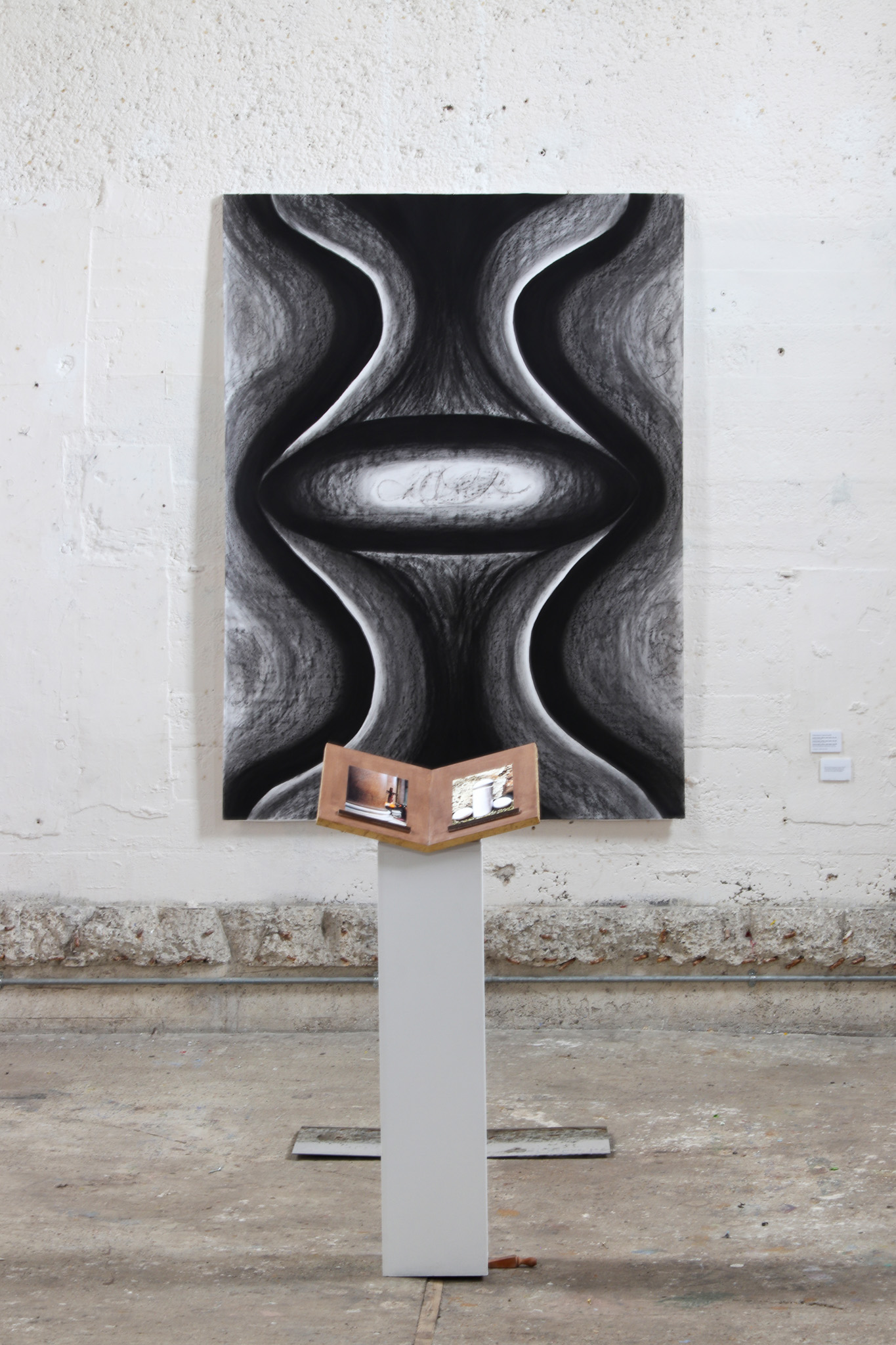
Come Back Often, and Take Me.
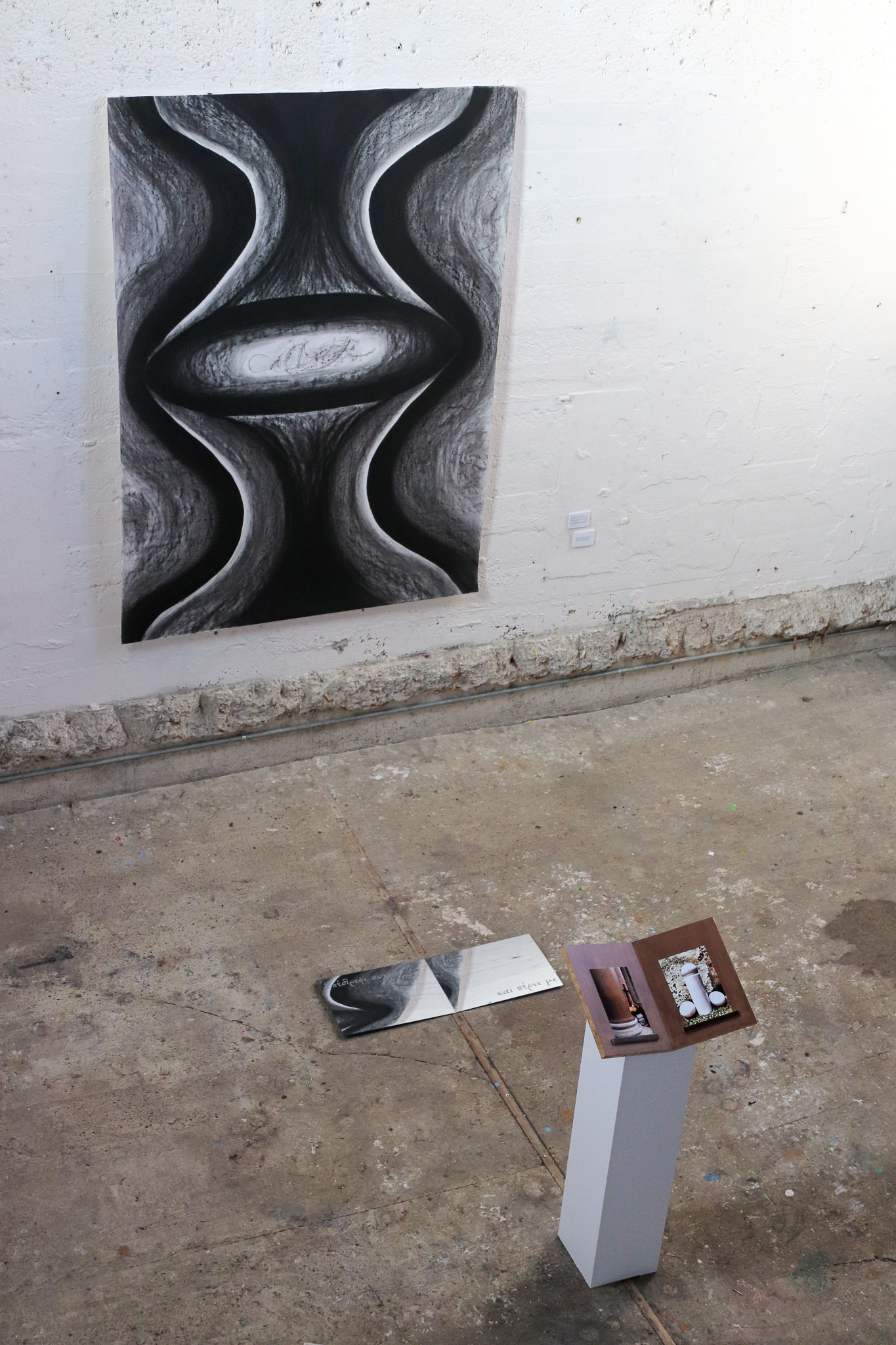
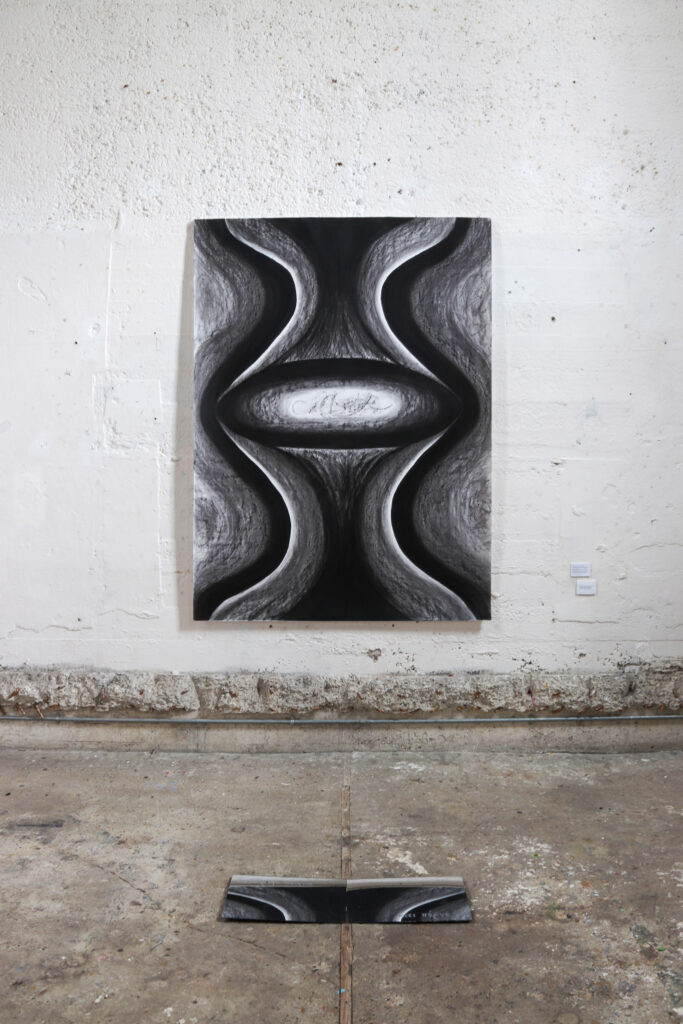
Come Back Often and Take Me, site-specific mixed-media installation.
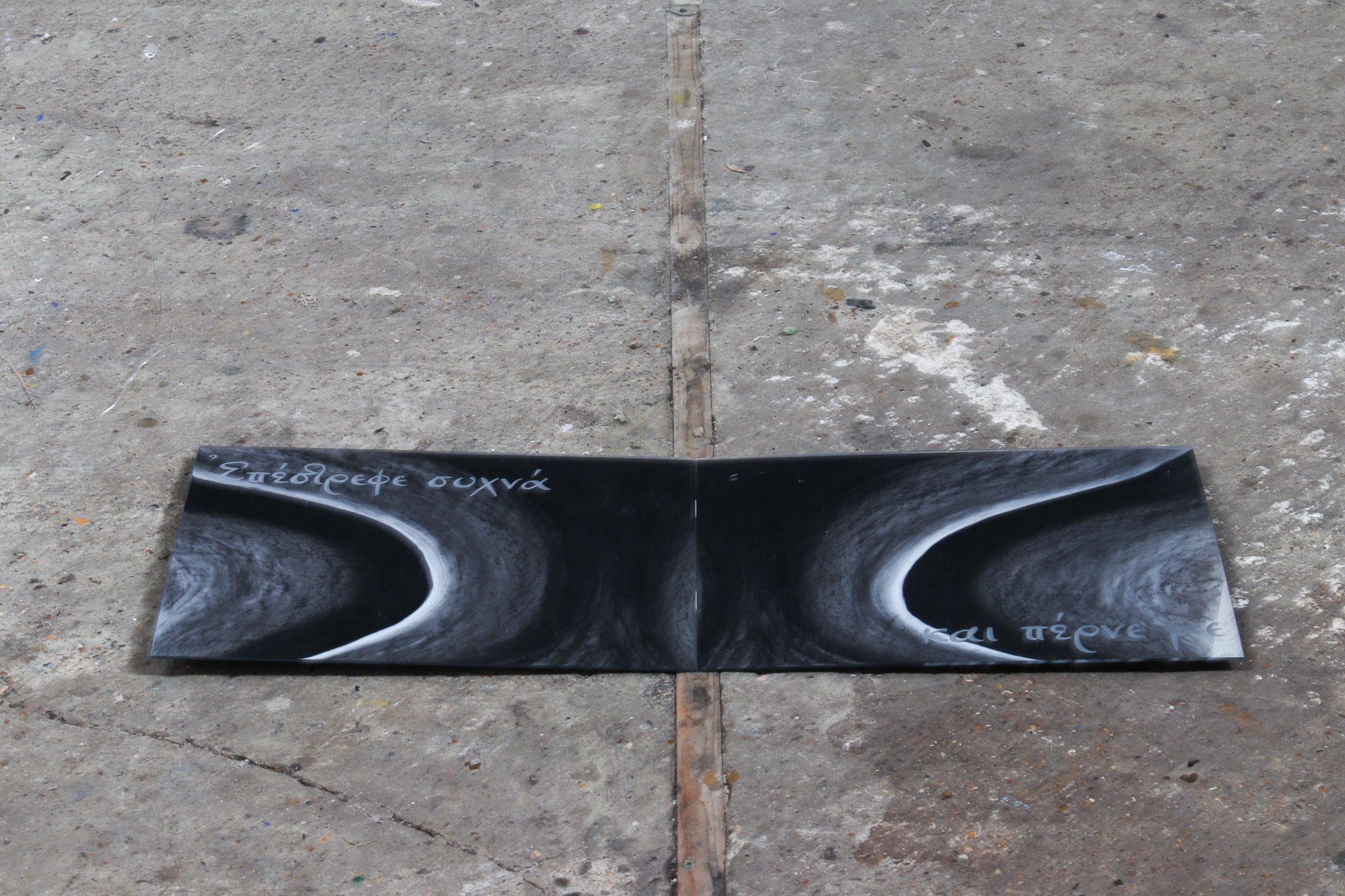
Come Back Often and Take Me (1), 150 x 200 cm, charcoal drawing on paper.
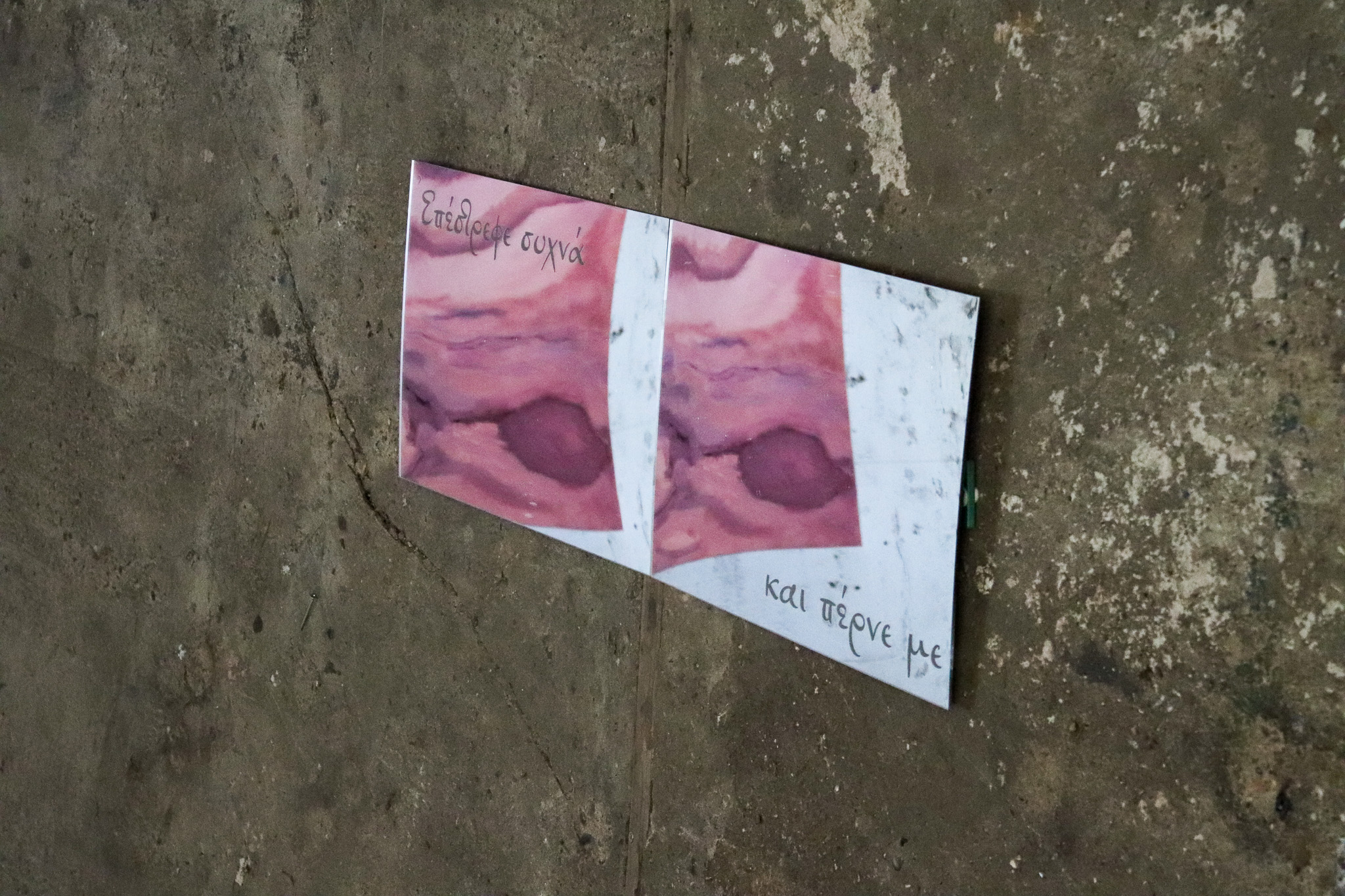
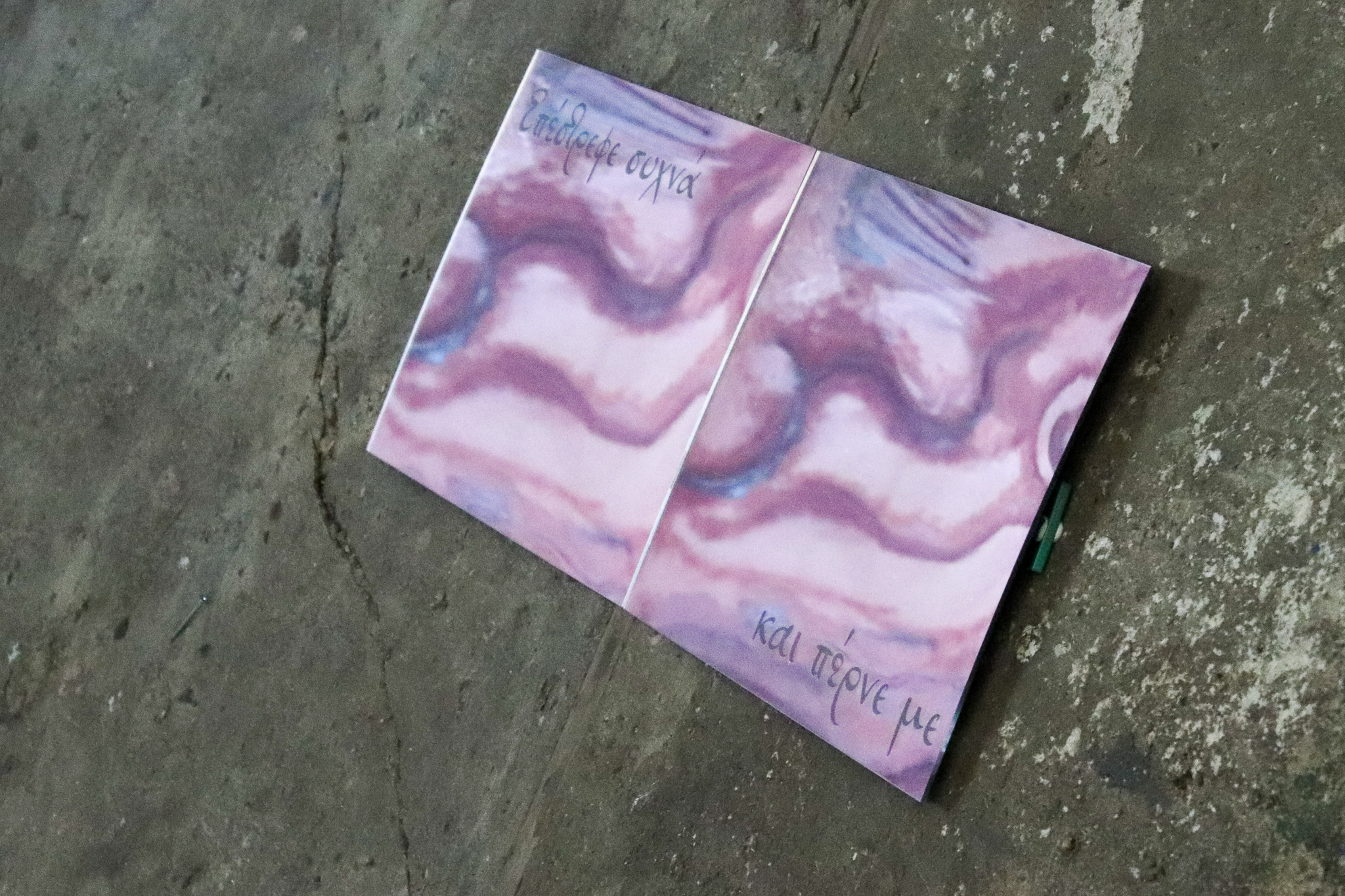
Come Back Often And Take Me 2, (2x) 30 x 42 cm, layser-carved perspex acrylic mirror.
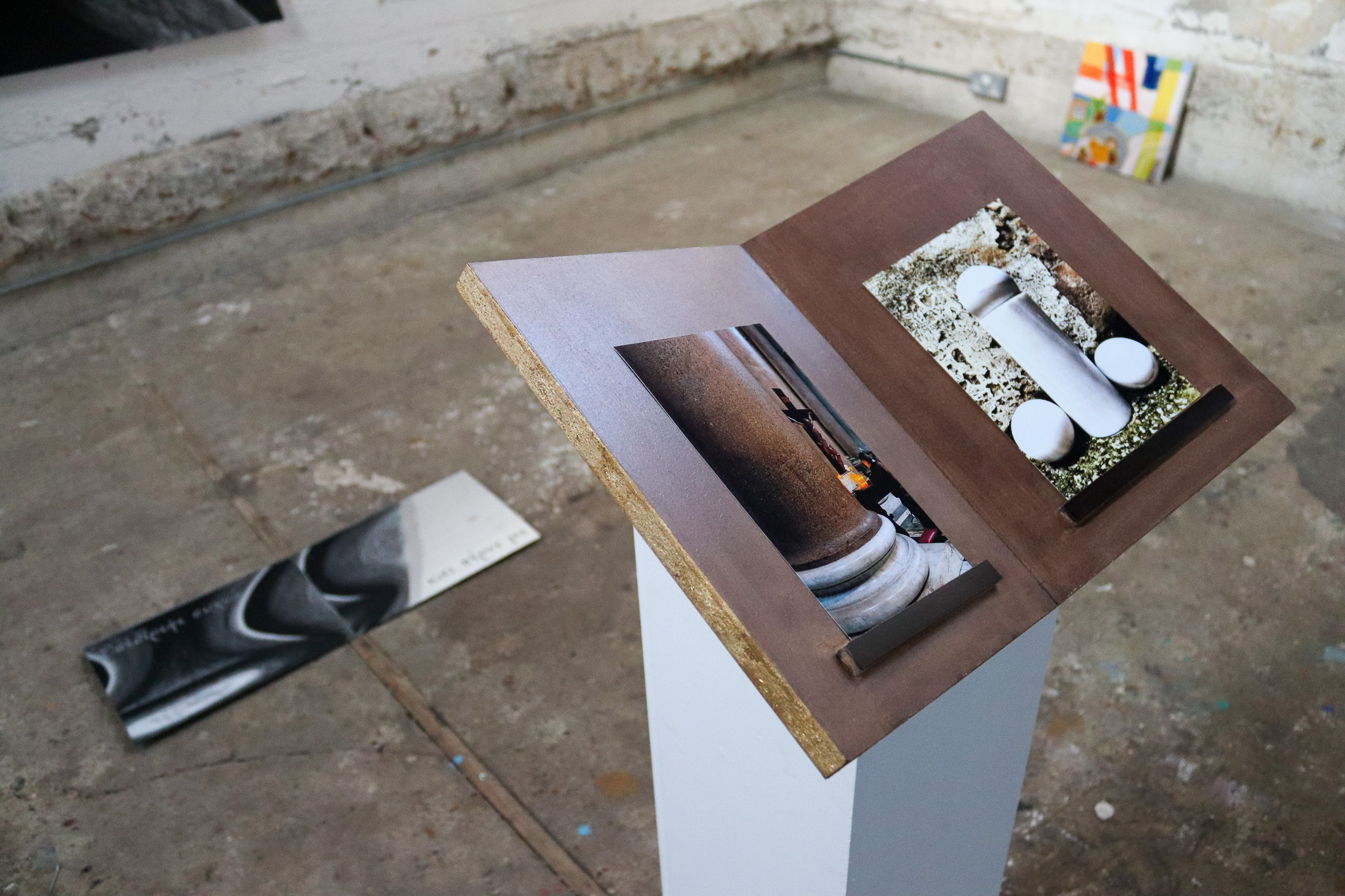
Come Back Often And Take Me 3, a)The plinth, 33 x 47 x 114 cm, MDF, wood, wood stainer, wood paint, gold leaf. b) (2x) 13.5 x 20.5 cm, photography on archival paper.
This is a site-specific installation consisting of three elements: a drawing, a mirror and photos on a plinth at Southwark Park Galleries: Dilston Gallery, as its history as a former church resonated with my exploration of sexuality and divinity or the sacred and the profane. The space shaped the interpretation of my work, reinforcing its conceptual depth. Visually, the rough textures of the gallery’s floor and walls echoed those found in my drawing and photography, creating a strong material connection. I arranged the three components in a linear composition to guide the audience’s reading of the work. Positioned in front of the altar, a viewer first encounters the photography, then their gaze moves to the mirror, and finally to the drawing, seen through its reflection. This interaction invites contemplation on presence, perception, and the interplay between physical and symbolic space.
The drawing draws inspiration from Mark Aguhar’s No Top Needed (2010) and Andy Warhol’s film Blowjob (1964). I wanted to merge the profane with the sacred, referencing Aguhar’s piece of two males penetrated by a sex toy while capturing the divine qualities Warhol evokes in his film. Blowjob (1964) transforms an explicit act into something almost spiritual by focusing on the subject’s face, using light and minimalism to strip the scene of overt sexuality. I wanted to convey the sacred side of a profane act as Warhol does in the BJ film.
In my piece, I explore this tension by incorporating symmetry and light, elements often associated with divinity, while maintaining a strong sense of physicality. The composition plays with penetration, pushing, and pulling, creating a dialogue between desire and transcendence. Through this, I aim to challenge perceptions of what is sacred and what is profane, blurring the boundaries between them.
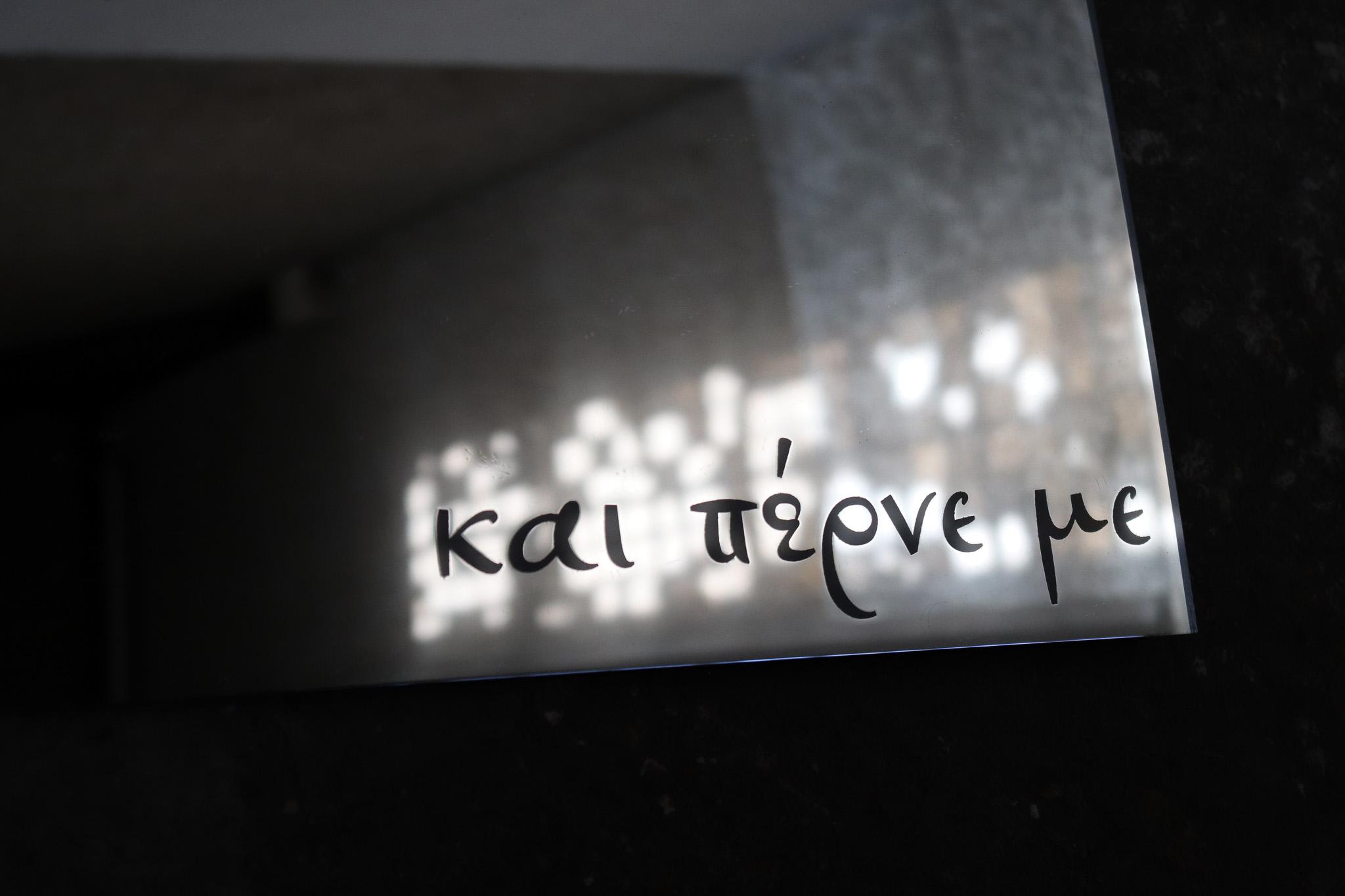
I envisioned the mirror as an ancient tablet, carving into it as one would engrave on an ancient stone, inscribing a verse from a poem by Constantine Cavafy, a Greek queer poet (1863–1933). The mirror, loaded with symbolism, echoing Narcissus in Greek mythology, serves as an entry point. As viewers approach, they first read the text before encountering their own reflection, creating an intimate dialogue between past and present.
During my research, I discovered a font based on Cavafy’s handwriting and secured permission from the Onassis Foundation to use it for etching the verse: “Come back often and take me.” Though the poem is not explicitly sexual, this line introduces an element of ambiguity and playfulness.
Inspired by Cy Twombly, who also inscribed Cavafy’s poetry into his work, I sought to bridge time, bringing the voice of a 20th-century poet into the contemporary moment through material and form.
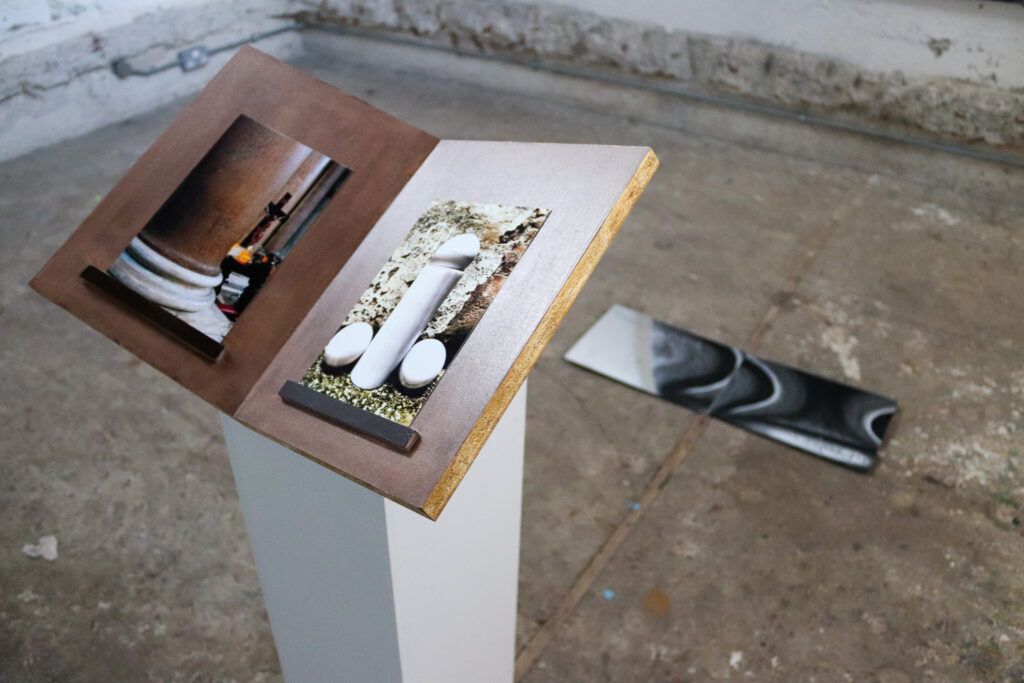
These two photographs establish a dialogue between the sacred and the profane. I took the left photo inside and the right one outside of a church in Italy. This pairing not only reinforces the theme of my installation but also resonates deeply with the setting, Dilston Gallery being a former church, creating a conversation between subject and space.
The materiality of the photographed objects, such as marble and wood, further strengthens this connection, echoing the textures within the gallery itself.
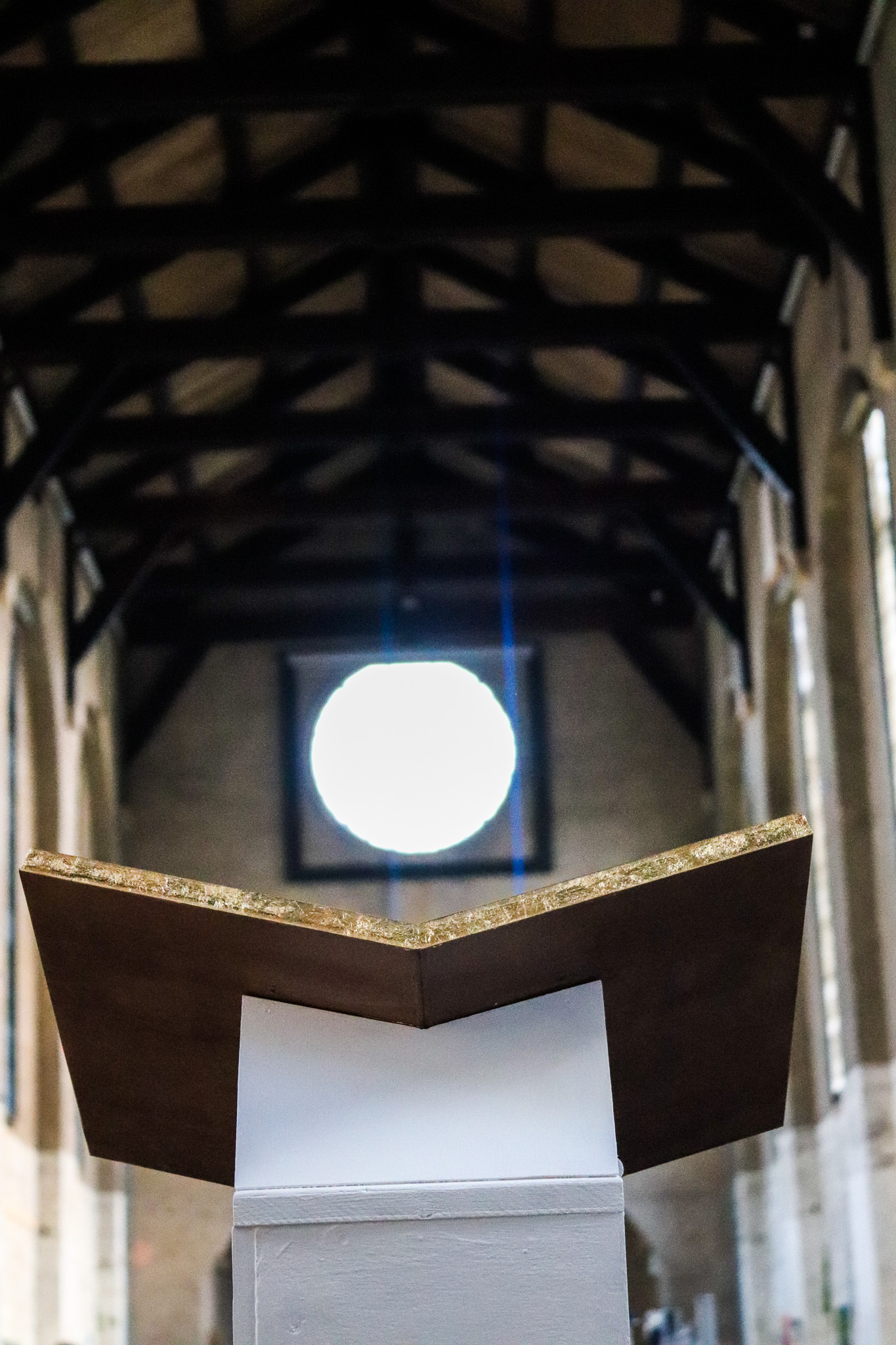
The plinth is constructed with found materials. I constructed a modern white plinth with an MDF book on top. To bridge tradition with contemporary aesthetics, I stained the book brown, both to contrast with the white plinth and to echo the warm tones in the photographs, allowing the visual language to expand beyond the images. Inspired by the gold bases of Bible holders in Orthodox churches, I incorporated gold leaf, referencing both religious iconography and the gilded edges of modern books. It is inviting viewers to ‘read’ it as a didactic object, offering access to knowledge and reflection.